Most incense asks for fire. Ours asks for a pulse.
Hand-pressed incense beads, worn against the skin. Agarwood, sandalwood and pear — the blend Li Yu kept behind his bedchamber curtains in 970.
The Curtain Chamber — $148Three things we can prove.
Agarwood, not filler.
Nine parts agarwood dust to one part sandalwood, with pear. The ratio is written down in Xiang Cheng, a Ming survey of Chinese fragrance. You can read it yourself.
Pressed by hand, not extruded.
The pears are hollowed like jars, packed with the wood dust, capped with their own stems, and steamed three times before anything is ground. It takes months to settle. There is no shortcut in the method.
The original pear is gone.
The pear Li Yu used no longer exists. We use the closest living cultivar and name it on the card inside the box. Not a medicine. Not a supplement. A scent you wear.

The Curtain Chamber
Seventeen beads, 12 mm, one colour. A formula recorded in Xiang Cheng, the Ming survey of Chinese fragrance: one ounce agarwood dust, one tenth of an ounce sandalwood, ten pears hollowed like jars and steamed three times.
How to light an incense stick, properly.
Not a match, not a lighter. A candle, held at an angle, until the tip glows amber. Then wait. That is where the scent begins.
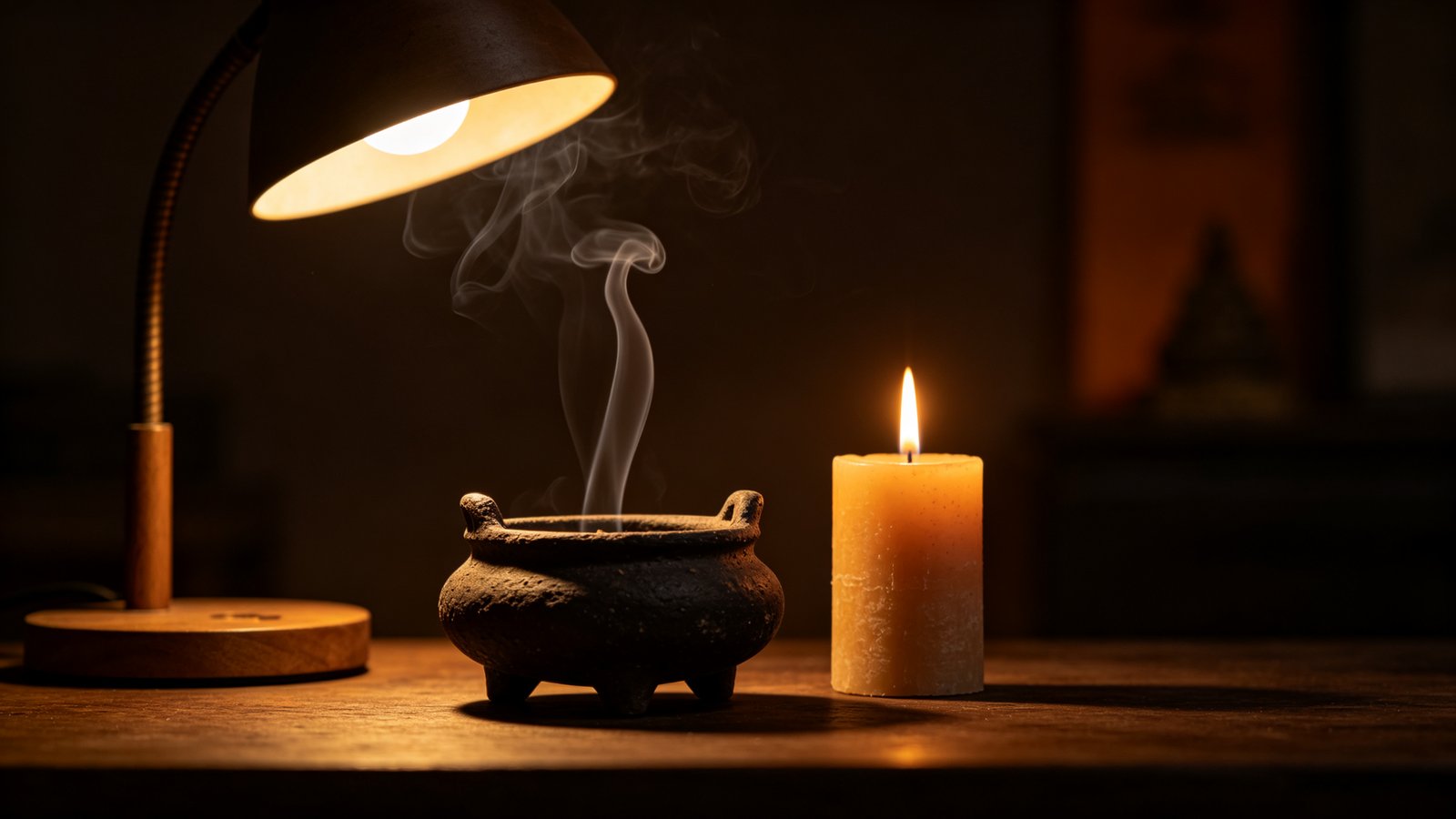
Made of clay, wood, and time.


Notes on slow living.
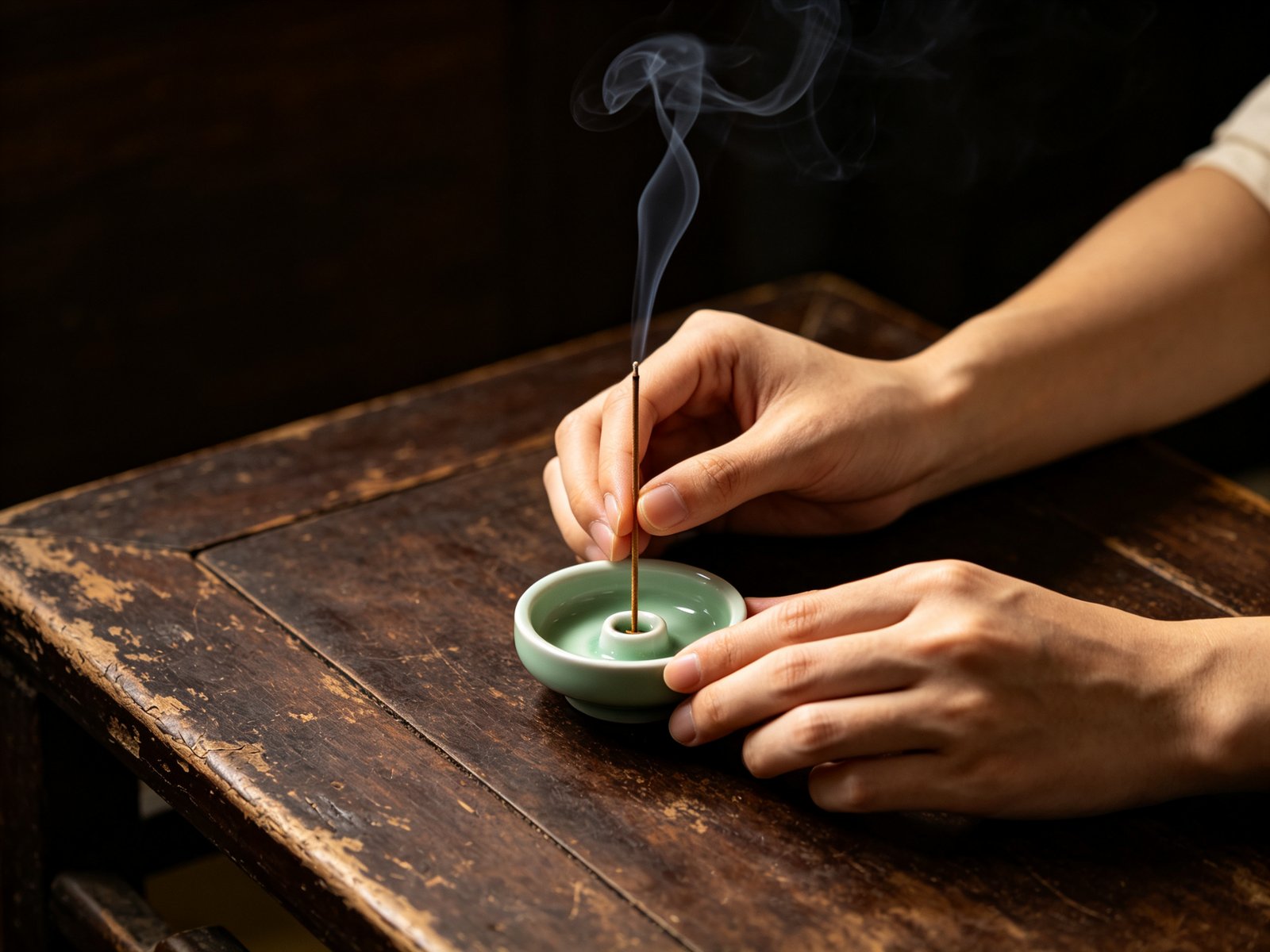
How to light an incense stick

The Art of Ash